
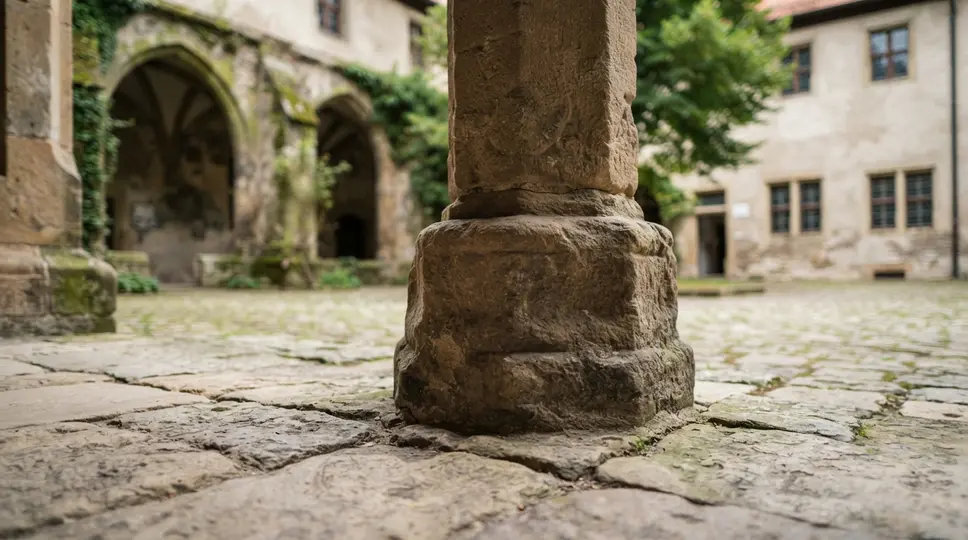
Jena, July 25, 2026 – The historic Karmelitenkloster will regularly open its doors to history enthusiasts from July to October 2026. With free admission, the building, which was renovated in 2017, offers rare insights into the history of the city of Jena and the Reformation.
- Location: Karmelitenkloster, Engelplatz 1, 07743 Jena
- Period: July to October 2026 (selected days)
- Opening hours: 11:00 a.m. to 3:00 p.m. (until 4:00 p.m. on Oct 31)
- Admission: Free
- Accessibility: The building is wheelchair accessible
- Contact: Stadtmuseum Jena, Tel. 03641 49-8261, E-Mail: stadtmuseum@jena.de, Web: www.stadtmuseum-jena.de
Exclusive opening dates from July to October 2026
Since its comprehensive renovation in 2017, the historic building has been open to the public on selected days. Those wishing to visit during the summer and autumn of 2026 have the opportunity on the following dates:
- Saturday, 25.07.2026 (11:00 a.m. to 3:00 p.m.)
- Saturday, 08.08.2026 (11:00 a.m. to 3:00 p.m.)
- Saturday, 22.08.2026 (11:00 a.m. to 3:00 p.m.)
- Sunday, 13.09.2026 (11:00 a.m. to 3:00 p.m.)
- Saturday, 26.09.2026 (11:00 a.m. to 3:00 p.m.)
- Saturday, 10.10.2026 (11:00 a.m. to 3:00 p.m.)
- Saturday, 31.10.2026 (11:00 a.m. to 4:00 p.m.)
Admission is free on all dates. The exhibition inside illustrates the eventful history of the site, among other things through archaeological finds.
Searching for traces in the heart of the city
The tour offers insights into archaeological discoveries and the architectural development of the area. Those interested in contemporary exhibitions alongside historic walls can find changing art projects at the municipal Kunstsammlung Jena.
Historical significance of the Karmelitenkloster
The Karmelitenkloster at Engelplatz looks back on a long tradition. Originally founded in 1382 by the Carmelites – a mendicant order established in the Holy Land in the 12th century – the complex shaped spiritual life in Jena for centuries.
In the course of the Reformation, the order lost its property. During this period of upheaval, a printing press was set up in the former monastery, where the second complete edition of Martin Luther’s writings was printed. Later, the area saw a new use: from 1669, the inn “Zum goldenen Engel” opened there, which gave the present-day Engelplatz its name. Following the extensive renovation in 2017, the building remains accessible to the public as a historical monument.
Book recommendation on the history of the Reformation in Thuringia
Exciting insights into the work of Martin Luther and the historical sites of the Reformation.
*Advertising / Affiliate Link: As an Amazon partner, we earn from qualified sales at no extra cost to you.
Source:
Monks, Luther and the Golden Angel
Transparency note: This article was created automatically, editorially reviewed, and expanded with AI support.