
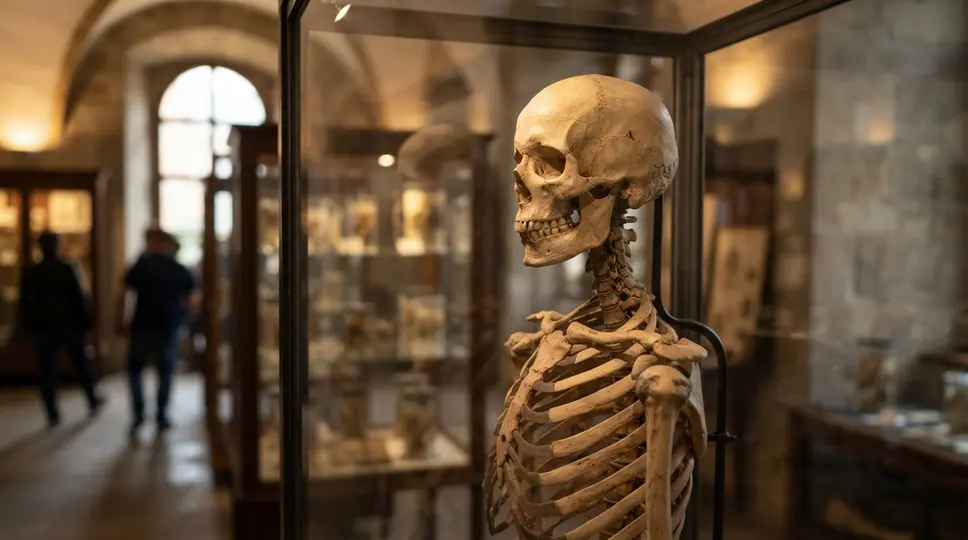
Jena, 22.08.2026 – The Friedrich Schiller University Jena offers an extraordinary and educational excursion destination with its traditional Anatomical Collection. Visitors can explore the functionality of the human body through authentic specimens and detailed models.
- Location: Institute of Anatomy at FSU Jena, Teichgraben 7, 07743 Jena
- Opening Hours: Wednesdays 2:00 PM to 5:00 PM, Saturdays 10:00 AM to 1:00 PM
- Admission: Free
- Contact: Tel. 03641 9396110 | Web: uniklinikum-jena.de/anatomie1
- Important Note: Children under 12 years of age are only admitted when accompanied by an adult; respectful and dignified behavior is mandatory.
Fascinating Anatomy and Historical Milestones
The exhibition conveys anatomical fundamentals in an illustrative manner. Artfully prepared specimens and modern models display organ structures, muscles, and skeletal composition in detail. Among the outstanding exhibits of the more than 200-year-old collection are the historical intermaxillary bone specimens, which are closely linked to the scientific research of Johann Wolfgang von Goethe in Jena.
The collection is particularly suitable for guests interested in medicine and history and serves as an ideal educational opportunity in any weather. Those looking for further event tips for Thuringia will find here one of the most significant collections in the state in terms of scientific history.
Sensitive Handling and Rules of Conduct
As the exhibition rooms contain real human specimens and body parts of the deceased, the University Hospital places great importance on a dignified environment. Clear rules apply to the visit:
- Age Restriction: Children up to and including 12 years of age may only enter the rooms when accompanied by an adult at all times.
- Respectful Conduct: Quiet and appropriate behavior in the exhibition area is mandatory.
- Regular Visiting Hours: The permanent exhibition is open on Wednesday afternoons and Saturday mornings.
History of Science: Goethe’s Discovery in Jena
The Jena anatomy department looks back on a long tradition. In 1784, Johann Wolfgang von Goethe, together with the Jena anatomy professor Justus Christian Loder, demonstrated the existence of the intermaxillary bone in humans here. This scientific milestone contributed significantly to proving the anatomical relationship between humans and animals and established the collection’s global reputation as a medical-historical monument.
Source:
Anatomical Collection Jena – Permanent Exhibition
Transparency Note: This article was created automatically, editorially reviewed, and expanded with AI support.