
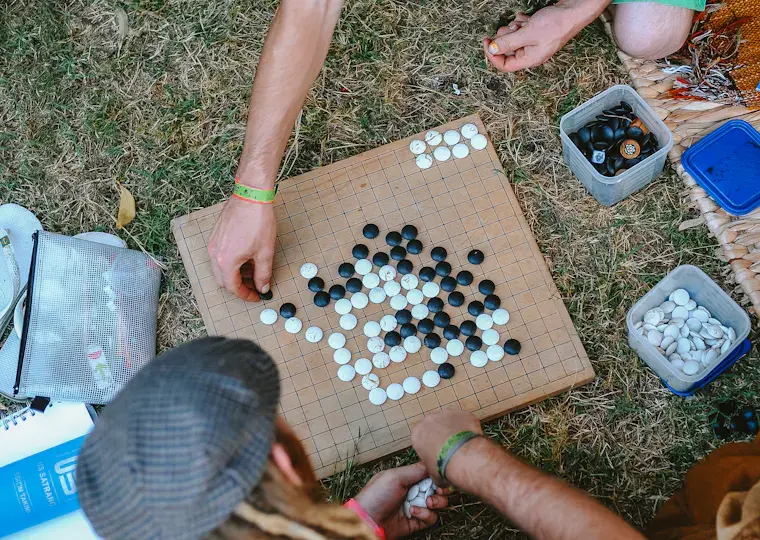
Jena, April 18, 2026. At the Universität Jena, a world-first experiment has begun: Eight top players of the Asian board game Go compete in a tournament while a research group records their physiological data.
- What: Scientific Go tournament for brain research
- When: April 18 to 23, 2026
- Where: Universität Jena
- Focus: Oxygen consumption in the brain, dealing with setbacks, gender differences
Mental Sports for Science
From April 18 to 23, the Universität Jena is transforming into a living laboratory. In a total of twelve matches, the eight top players compete in the complex strategy game. In contrast to classic competitions, however, the primary goal here is the collection of scientific data. Using state-of-the-art measurement technology, researchers observe the physiological strain on the brain during these peak cognitive performances.
Researchers are paying particular attention to blood flow and oxygen consumption in various brain regions. Central questions of psychology and neurology are to be clarified: How do the players react to unexpected setbacks on the board? Are there significant differences in strategic approach and stress processing between genders? The data obtained is intended to provide insights into how the human brain processes complex problem-solving and tactics under pressure.
Background: Go and Cognitive Research
The board game Go originally comes from Asia and dates back to a tradition thousands of years old. Due to its almost infinite number of possible moves, it is considered one of the most complex strategy games in the world. The game is about controlling territory, far-sighted tactics, and absolute concentration. With its strong focus on psychological and neuroscientific research, the Friedrich-Schiller-Universität Jena provides the ideal environment for such an experiment. The results of the Jena study could have relevance far beyond pure mental sports in the future – for example, to better understand how people deal with stress and problem-solving in highly complex everyday situations or in the modern, demanding working world.
Source:
Unique experiment in Jena: What happens in the brain during mental sports?
Transparency note: This article was created automatically, editorially reviewed, and expanded with AI support.