
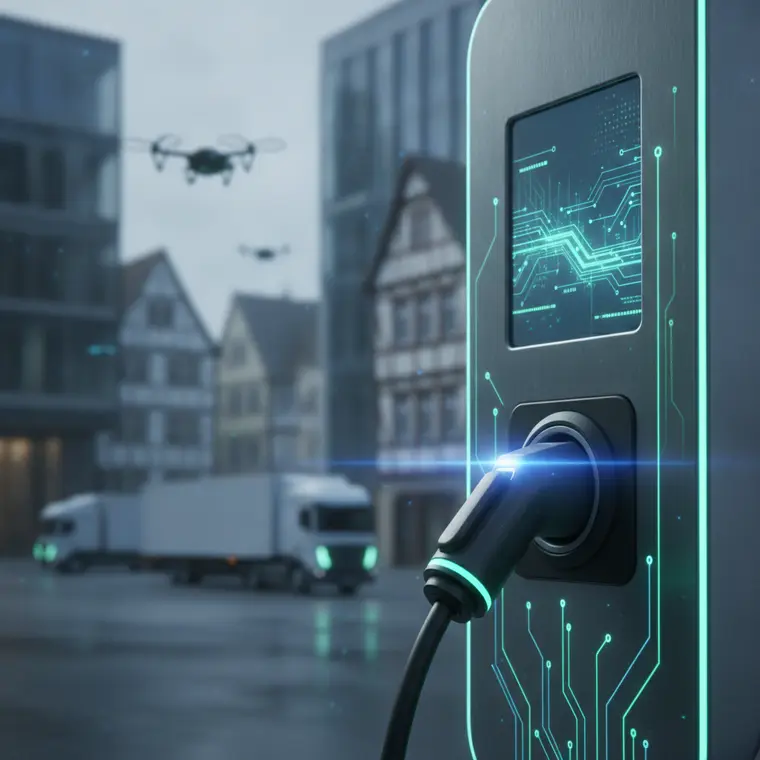
Jena, 03.07.2026 – The logistics industry is facing a profound transformation: The 12th Smart Compliant Logistics (SCL) Congress at the Volkshaus Jena discussed the path toward digitalization and decarbonization of freight transport. The focus was on the massive challenges facing Thuringian transport companies during the transition to sustainable supply chains (SLC).
- Event: 12th Smart Compliant Logistics (SCL) Congress
- Date: June 30 and July 1, 2026
- Location: Volkshaus Jena
- Topics: Artificial Intelligence, e-logistics, sustainable supply chains (SLC), charging infrastructure
- Organizer: DAKO GmbH
Thuringia as a logistical bottleneck: The SLC challenge
As a central link in nationwide freight transport, Thuringia is under particular pressure to adapt. Establishing sustainable supply chains (SLC) requires enormous investments from medium-sized transport companies in the Jena region. In addition to CO2 taxes and regulatory requirements, market pressure is the primary driver for green initiatives. However, the practical conversion of fleets to alternative drive systems is often hindered by the harsh reality of the infrastructure.
Artificial Intelligence and the human factor
Martin Friedrich from the Fraunhofer Institute for Material Flow and Logistics (IML) emphasized that Artificial Intelligence (AI) plays a key role in route planning to avoid empty runs, thereby directly reducing costs and emissions. He noted that the biggest hurdle for companies is usually not the technology itself, but rather staff acceptance and outdated, legacy IT systems. Friedrich advises logistics companies in the region to introduce AI systems gradually and for clearly defined, recurring tasks.
E-mobility hindered by charging infrastructure
The challenges of fleet decarbonization are even more apparent. According to industry experts like Maximilian Zähringer (FRYTE Mobility GmbH), the focus in the SLC context is shifting away from pure vehicle range toward complex energy supply. Transport companies will need to create their own “energy schedules” to avoid load peaks at their depots. Without reliable and reservable public charging stations, the widespread use of electric trucks remains a high economic risk for Thuringian freight companies. These infrastructural issues also touch upon societal debates regarding the energy transition, as currently addressed in the ENERGIE exhibition at the Jena EnergieLabor.
🏛️ The Volkshaus Jena as a historic congress venue
The Volkshaus Jena in the city center has been a central hub for science, culture, and business for over a century. Commissioned by the Carl-Zeiss-Stiftung, it now serves as a modern event center. Its historic architecture provides an ideal setting for high-profile professional congresses like the SCL Congress, which addresses urgent future issues directly within the Thuringian technology region.
Source:
SLC: What is currently occupying transport entrepreneurs
Transparency note: This article was created automatically, editorially reviewed, and expanded with AI support.