
Jena, September 17, 2026 – Scientists from Friedrich-Schiller-Universität Jena are participating in a new international Arctic mission at the Tara Polar Station. The research station is trapped on an ice floe in the Arctic Ocean and is drifting with the ice through the polar night.
- Event: Start of the Arctic mission at the Tara Polar Station
- Participation: Researchers from Friedrich-Schiller-Universität Jena led by Georg Pohnert
- Focus: Behavior of microalgae and bacteria during the polar night
- Location: Arctic Ocean (ice drift)
Scientific Significance of the Arctic Mission for Jena
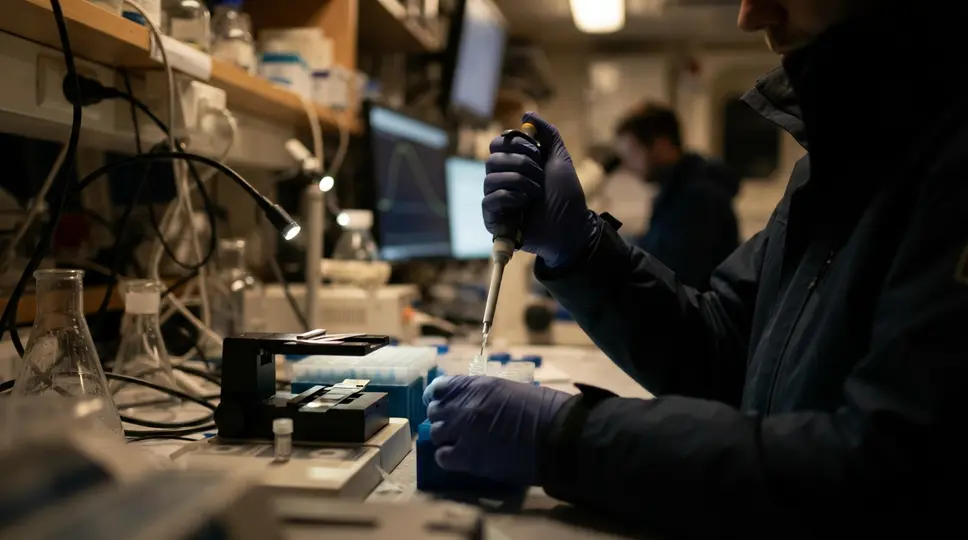
Led by bioanalyst Georg Pohnert, the team from Jena is focusing on the smallest inhabitants of the polar sea: microalgae, bacteria, and other microorganisms. The upcoming polar night, during which the sun does not rise for months, serves as a large-scale natural experiment for the scientists. Without sunlight, a vital energy source for the algae disappears, allowing the research team to study how these biological communities adapt to extreme conditions.
Microorganisms play a fundamental role in the global climate. Microalgae are at the base of the marine food web and collectively perform photosynthesis on a scale comparable to all land plants combined. They sequester large amounts of carbon dioxide and produce a significant portion of the world’s oxygen.
Essential Data Acquisition Through “Propulsion-Free” Drifting
The construction of the Tara Polar Station is of critical importance for the validity of the collected data. The ship was specifically designed for propulsion-free drifting in the ice. Pohnert compares the use of conventional, motorized icebreakers to attempting to study birdsong in the Amazon while using a bulldozer to cut a path through the jungle. By avoiding the use of onboard propulsion in the drift zone, preventing wastewater discharge, and reducing noise levels, the surrounding ecosystem remains largely undisturbed. Through a central shaft, known as the Moon Pool, measuring instruments can be lowered directly into the water beneath the ice.
⭐⭐⭐⭐⭐ 4.8 / 5
Insulated Stainless Steel Water Bottle
Reliably keeps drinks warm or cold during outdoor activities.
Background: Long-term Research and Analysis in Jena
While twelve crew members and scientists are stationed on the vessel for the months-long overwintering, the team led by Georg Pohnert coordinates operations from Thuringia. Following the return of sample material as part of the long-term observation expeditions of the Tara Ocean Foundation, detailed chemical analysis is conducted in the Jena laboratories. The research investigates which biochemical substances the microorganisms produce and what effects changes in these microscopic systems have on the marine food web.
Source:
When the lights go out in the Arctic: Jena researchers are on board the Tara
Transparency note: This article was created automatically, editorially reviewed, and expanded with AI assistance.