
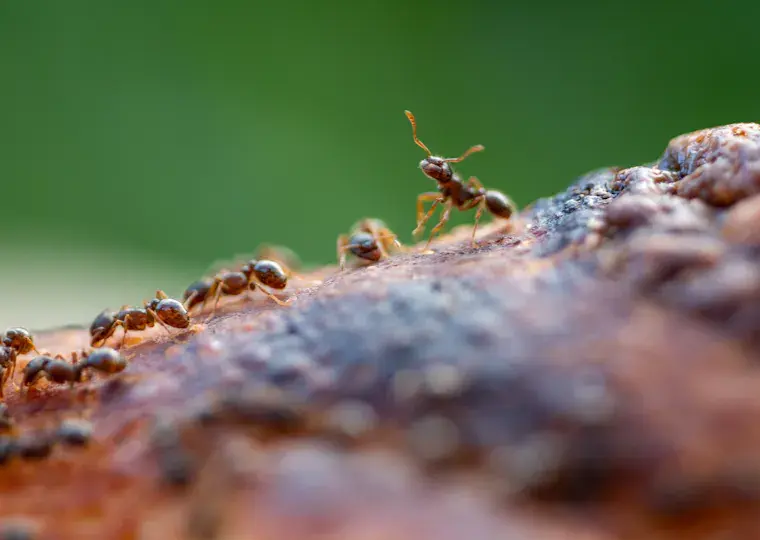
Jena, 16.05.2026 – The Jena city center is struggling with a massive spread of the invasive ant species “Lasius neglectus.” A suspected supercolony now extends over 30 hectares and is increasingly displacing native species. The situation for business owners and residents is reaching a critical point.
- Affected Area: Approximately 30 hectares in the city center (including Philosophenweg, Saalbahnhofstraße, Wagnergasse).
- Cause: The “Invasive Garden Ant” (Lasius neglectus), originally from Western Asia, forms a massive network of millions of insects.
- Consequences: Native species are being heavily displaced; affected households and businesses report severe pest infestations.
Tiny Creatures, Huge Ecological Problem
Measuring only a few millimeters, the “Invasive Garden Ant” is difficult for laypeople to distinguish from common native species. However, its mass appearance is striking. According to the assessment of Jena-based pest controller Thomas Loose, the species has long since formed a so-called supercolony in the city on the Saale. This massive network consists of millions of workers and hundreds of thousands of queens that cooperate instead of fighting each other.
“It wipes out all others, or almost all others,” Loose warns urgently. Since the species spreads within this network without natural enemies, its appearance often marks the end for native insect life in the affected areas.
Botanical Garden as a Possible Origin?
Lasius neglectus originally hails from Western Asia. The Jena expert suspects that the insects were introduced to the city more than two decades ago via plant imports. A possible “ground zero” for the spread could have been the Botanical Garden. The relatively mild and warm climate in the Saale valley favored the subsequent rapid reproduction of the heat-loving species.
The currently known infestation area has grown enormously: it extends from Philosophenweg to Saalbahnhofstraße and stretches from Fürstengraben to St.-Jakob-Straße. Densely populated quarters, the historic Johannisfriedhof, Johannisstraße, and the popular nightlife district Wagnergasse are also part of the approximately 30-hectare network.
Background: The Treacherous Task of Controlling Supercolonies
Invasive insects like the Invasive Garden Ant present pest controllers with immense logistical challenges. Since supercolonies have no clear territorial boundaries and house thousands of queens, classic contact poisons or short-term baiting often act only as a drop in the ocean.
Tips for affected residents in the Jena city center:
- No DIY experiments: Strong-smelling household remedies or commercial sprays usually only drive the insects temporarily into neighboring wall crevices or other rooms.
- Prevention: Cracks in window frames, baseboards, and masonry should be professionally sealed. Furthermore, no open food (especially sweets and meat) should be left out.
- Call for professional help: Effective control usually requires coordinated baiting strategies by professionals, where the poison is carried by workers deep into the nest to the queens to stop the reproduction cycle.
Source:
Hardly to be stopped: Invasive ants spreading massively in eastern city
Transparency Note: This article was automatically generated, editorially reviewed, and expanded with AI support.