
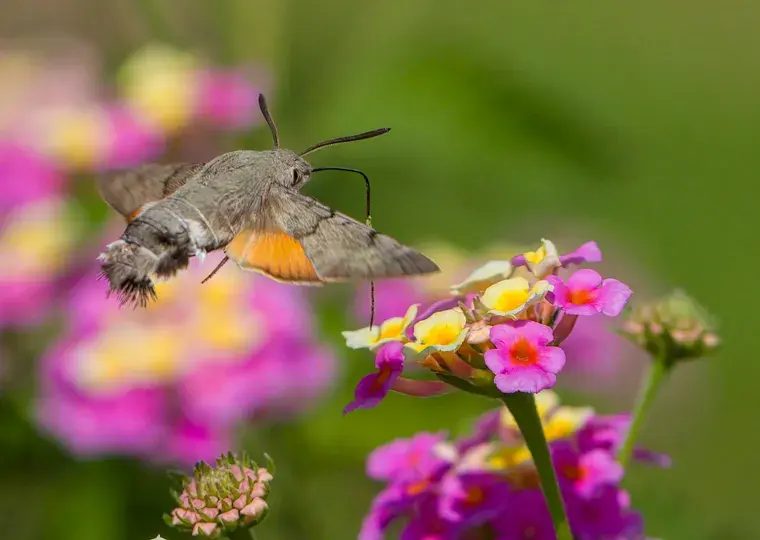
Jena. This summer, an unusually high number of butterflies are attracting attention in Jena’s gardens. Known as migratory moths, these insects hover in front of flowers like small hummingbirds to feed on nectar.
- Phenomenon: Noticeably frequent appearance of hummingbird hawk-moths in Jena
- Expert: Dr. Gunnar Brehm, biologist
- Cause: Warm, dry weather conditions favor these migratory moths from the Mediterranean region
- Tip: Promoting native plants and avoiding complete mowing to protect caterpillars
“Hummingbird hawk-moths are indeed noticeably frequent this summer,” says Jena biologist Gunnar Brehm. In a garden area in Langetal, five specimens were recently seen hovering around a butterfly bush simultaneously. The animals prefer dry and warm conditions, which is why this year’s weather is ideal for them. As migratory moths, they cover long distances from the Mediterranean region as far as Scandinavia.
Expert tips for an insect-friendly garden
While heat-loving species like the hummingbird hawk-moth or the southern small white feel at home in the region, native butterflies are often under pressure. For instance, the dusky large blue has become extinct in the Jena area. To specifically support butterflies and other insects in your own garden, expert Gunnar Brehm recommends concrete measures:
- Provide caterpillar food: The caterpillars of many butterfly species feed exclusively on native plants such as bedstraw. Exotic plants like cherry laurel or thuja offer no benefit.
- Suspend partial mowing: Flowering strips should be left standing longer and gardens should not be mowed completely all at once. This protects the caterpillars and ensures the survival of species such as the marbled white.
- Create nectar sources: A wide variety of native flowering plants attracts different butterfly species throughout the entire summer.
⭐⭐⭐⭐⭐ 4.8 / 5
Large insect hotel with nesting box for the garden
Build a natural retreat for wild bees and other beneficial insects in your garden.
Background: The biology of the hummingbird hawk-moth
The hummingbird hawk-moth (Macroglossum stellatarum) belongs to the sphinx moth family. Unlike most other sphinx moth species, which are nocturnal, this moth flies during the day. Because of its rapid, hovering flight and long proboscis, it is often mistakenly thought to be a hummingbird. However, the latter are found exclusively in the Americas. Thanks to its enormous mobility, the hummingbird hawk-moth can react flexibly to climatic changes.
Source:
Frequent visitors in Jena gardens
Transparency note: This article was created automatically, editorially reviewed, and expanded with AI support.