
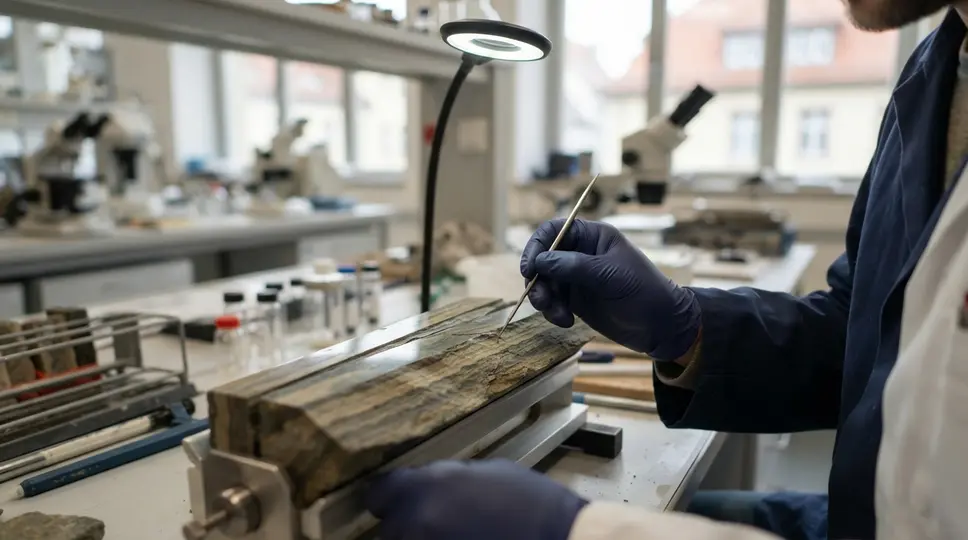
Jena, October 01, 2026. A research team including members of the Max-Planck-Institut für Geoanthropologie in Jena is calling on the International Union of Geological Sciences (IUGS) to provide full disclosure regarding the background of the decision against the Anthropocene. In an article published in the journal „Earth’s Future“, the scientists demand a critical review of the process.
- Topic: Demand for transparency regarding the IUGS decision on the Anthropocene
- Protagonists: Research team including Georg Schäfer (Max-Planck-Institut für Geoanthropologie Jena)
- Core criticism: Invalid votes, lack of responses to objections, and withheld expert reports
The debate surrounding the Anthropocene—the geological epoch in which human activity has become one of the most significant influences on Earth—has occupied the scientific community for years. In 2024, the IUGS rejected the official declaration of the epoch. However, the researchers from Jena emphasize that their criticism is directed primarily at the lack of transparency and potential inconsistencies in the decision-making process, rather than necessarily at the outcome itself.
Allegations of Procedural Errors and Invalid Votes
In the publication, the authors led by Georg Schäfer criticize the fact that no adequate scientific justification for the rejection has been published to date. Consequently, serious allegations remain unresolved. Specific points of criticism include the suspicion that invalid votes may have been counted during the ballot. Furthermore, it is criticized that the submitting Anthropocene Working Group was not given the opportunity to address objections. Additionally, an internal report that attested to unfair treatment of the working group was reportedly kept under wraps.
⭐⭐⭐⭐⭐ 4.8 / 5
Jena: History and Culture in a Photo Book
Interesting insights into the history and development of the science hub Jena.
Background: The Debate on the Anthropocene
The Anthropocene Working Group had collected extensive empirical data over ten years to define the beginning of the epoch. The year 1952 was proposed as the starting point, largely supported by radioactive residues from atomic bomb tests, which are detectable in sediments worldwide. Critics of the concept, however, argue that human environmental impacts began much earlier or that a period of approximately 70 years is too short in the context of Earth’s history to constitute an independent geological epoch.
Further information on the ongoing discussions and research surrounding this topic can be found on the MDR Wissen portal.
Source:
Anthropozän: Jenaer Forscher fordern Geologen-Union zu Transparenz auf
Transparency note: This article was created automatically, editorially reviewed, and expanded with AI support.