
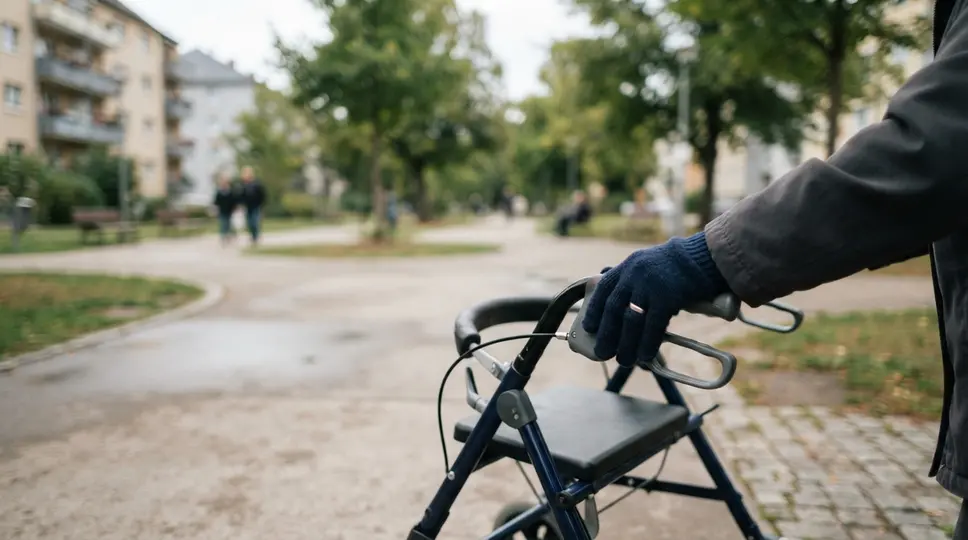
Jena-Winzerla, July 11, 2026 – A new neighborhood analysis shows that the Winzerla district is facing profound demographic aging. Despite an excellent local medical infrastructure, many seniors lack the necessary guidance to utilize existing support and care services in their daily lives.
- Topic: Demographic change and senior support structures in Jena-Winzerla
- Core problem: Good medical care meets a lack of awareness regarding everyday support services
- Proposed solution: Establishment of a central neighborhood coordination office to network all services
- Statistics: 27.2 percent of the approximately 14,300 inhabitants are over 64 years old
The prefabricated housing estate in transition: Home to an aging generation
Anyone walking through Winzerla today no longer sees a gray prefabricated housing estate. Between the renovated residential buildings, spacious green areas and tall trees define the district’s appearance. Many people have lived here for decades and have built a deep connection to their living environment. This is exactly where they want to spend their twilight years. However, demographic development is presenting the district with growing social challenges.
According to a joint neighborhood analysis by the City of Jena and the housing company Jenawohnen, Winzerla is already one of the most rapidly aging districts. Currently, 27.2 percent of the approximately 14,300 inhabitants are over 64 years old. Forecasts suggest that by 2030, Winzerla will have the highest average age in the entire city on the Saale. The situation is exacerbated by the fact that more than every second household is a single-person household. Many seniors live widowed or on their own, and almost a third have lived in the neighborhood for at least 20 years.
Good medical infrastructure faces a lack of awareness
The analysis reveals a clear discrepancy: while the physical infrastructure for older people in Winzerla is excellently developed, there is a lack of awareness and easy access to everyday support services. On one hand, residents benefit from short distances and excellent basic services in the district:
- Numerous resident general practitioners and dentists
- Local physiotherapists and medical service providers
- Pharmacies and versatile shopping opportunities directly on-site
- Barrier-free connection to the Jena public transport network
On the other hand, there is a significant information gap. Although there is a wide range of services in the district – from care services and counseling centers to meeting places such as storytelling cafes, sewing workshops, and volunteer neighborhood help – these are often unknown to the target group. In an emergency, many seniors do not know who to turn to in the event of sudden need for care or for simple support such as shopping services. Since the internet is often only used to a limited extent by older people, there is a lack of visible, analog guidance.
Neighborhood coordination as a solution for better networking
To close this information gap, the City of Jena and Jenawohnen are planning to establish a central neighborhood coordination office. This is to be established as a permanent, physical contact point in the district to bundle existing services and make them more visible. The planned measures include:
- Active networking of care, health, and counseling services under one roof
- Development of non-digital information channels such as central information boards or printed guides in the neighborhood
- Structuring and mediation of volunteer engagement for neighborhood assistance
The potential for volunteer support exists in the district: the analysis shows that many residents would be willing to volunteer one to two hours a week for older neighbors. For Social Affairs Officer Kathleen Lützkendorf, the main goal is to enable people to live as long and self-determined a life as possible in their familiar living environment. Better coordination should ensure that no one remains isolated in old age. Community meeting places and social activities are also important for cohesion. Older citizens looking for variety and social contact can find a good opportunity for exchange at the flea markets in Jena starting July 11, for example.
🏛️ History & Development: From new development area to green residential quarter
Winzerla was built from the 1970s onwards as a large new development area using prefabricated construction methods to create urgently needed housing for the growing population of Jena – especially for the employees of the Zeiss works. After the political change in 1990, comprehensive urban redevelopment began. Through targeted renovations, partial demolition, and the generous greening of the inner courtyards, the former concrete quarter transformed into a nature-oriented and popular residential area. Today, the demographic structure reflects the history of the district: many first-time residents have stayed and are now aging together in their familiar neighborhood.
Source:
Aging in Winzerla: Why Jena’s oldest district needs better guidance
Transparency note: This article was created automatically, editorially reviewed, and expanded with AI support.