
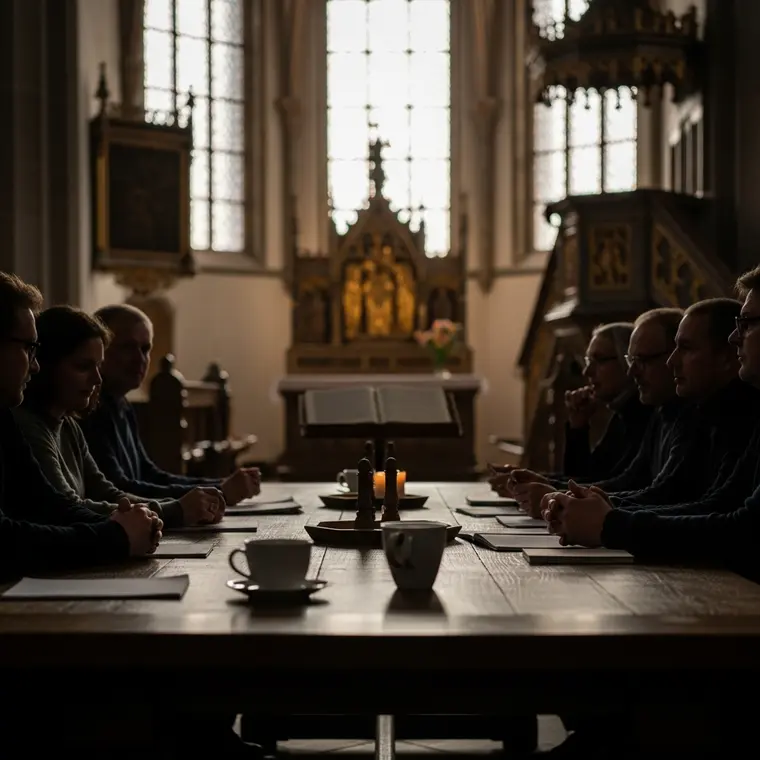
Jena, 23.04.2026 – Tomorrow, Friday, April 24, 2026, the Protestant Congregation of Jena invites you to a detailed theme evening regarding church asylum. The event is intended to offer interested parties a well-founded insight into the practice as well as space for an open exchange.
- Event: Theme evening on church asylum
- Date: Friday, April 24, 2026
- Time: 6:00 PM
- Location: Gemeindehaus Stadtmitte, August-Bebel-Straße 17
- Admission: Free
Practical Questions and Theological Motivations
The evening focuses on both the organizational challenges and the ethical foundations of church asylum. Visitors will receive answers to practical questions about the process, the legal framework, and the daily support of the people affected.
Various discussion partners will be on site to provide professional expertise and first-hand exchange. Adrian Papenhagen, the migration officer of the Evangelical Church in Central Germany (EKM), will shed light on the structural and church-political aspects. In addition, Bo Osdrowski and Daniel Stahl, both of whom are actively involved in the field of church asylum, will share their personal experiences and be available to answer questions from the audience.
Background: What does church asylum mean?
In church asylum, church congregations grant refugees temporary protection in their premises to prevent an imminent hardship during deportation that the congregation considers unreasonable. The goal is usually to obtain a new review of the individual case by state authorities – for example, the Federal Office for Migration and Refugees (BAMF). Although church congregations in Germany do not have a legal vacuum, this form of humanitarian protection is tolerated under certain strict conditions in an agreement between the state and the churches and is often associated with a high level of voluntary and organizational effort for the receiving congregation.
Source:
Theme evening on church asylum
Transparency note: This article was automatically created, editorially reviewed, and expanded with AI support.