
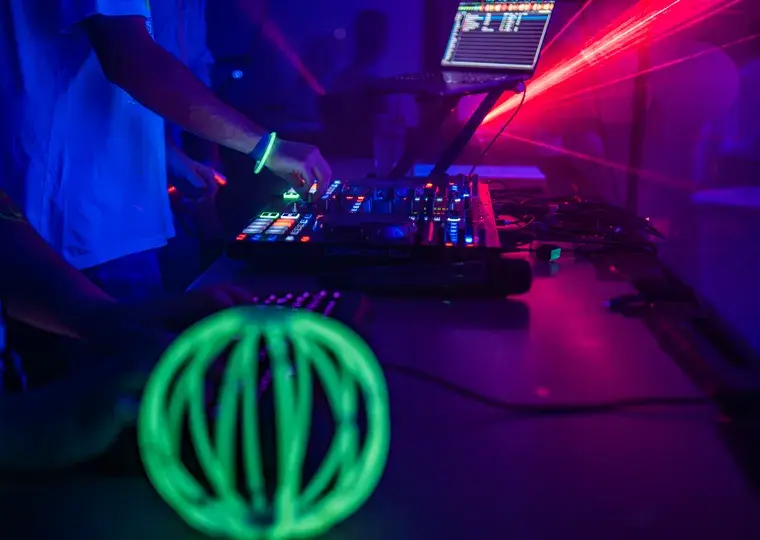
Jena, September 13, 2026 – Exactly one year ago, Christoph Litwinow took office as Jena’s first Nightlife Coordinator. The position, funded by the federal government and the city, was intended to serve as a link between clubs, independent organizers, authorities, politicians, and residents. A review after twelve months presents a nuanced picture: while smaller collectives benefit from shorter bureaucratic processes, structural challenges such as a lack of space and rising costs remain.
- Topic: One-year review of the Nightlife Coordinator in Jena
- Coordinator: Christoph Litwinow (first position of this kind in Thüringen)
- Positive effects: Faster approval processes for independent organizers, reactivation of the booking roundtable
- Unresolved issues: Lack of space for open-air events, increased operating costs, and declining visitor numbers in clubs
Short paths for small organizers and independent collectives
The establishment of the coordination office has paid off noticeably, especially for independent associations and smaller actors. One example is the Jena collective Paraphora, which organizes regular open-air events in urban spaces. Previously, when formal permits had to be obtained from various authorities, Litwinow acted as a direct interface to the administration. Processes that previously took weeks could often be clarified within a short time.
Established institutions such as the student-run Rosenkeller or the Kassablanca also view the establishment of a permanent contact person positively, even if they require acute administrative assistance less frequently due to their many years of experience. To strengthen the scene, the booking roundtable was reactivated, which promotes direct exchange between the various club operators and organizers every four to six weeks.
Systemic problems: Lack of space and cost burden
Despite improved communication and cooperation, the Nightlife Coordinator position faces systemic limits. Club representatives emphasize that fundamental problems cannot be solved by a coordinator. Established venues continue to complain about declining guest numbers compared to the time before the COVID-19 pandemic. At the same time, personnel, technology, and DJ fees have become more expensive, while these costs can hardly be passed on to the public through ticket prices.
Another central problem remains the search for suitable event spaces. Independent collectives can hardly find any legally usable areas for cultural events in the city area. Even smaller formats that end in the evening hours are subject to strict requirements. Although the administration is cooperative, it cannot create replacements for lost areas without new spatial planning concepts.
Outlook and next projects
A visible result of the increased networking is scheduled for October 23, 2026: the first “Long Night of Club Cultures,” in which nine Jena cultural venues will participate with a joint ticket. Whether the Nightlife Coordinator position can be secured long-term beyond the funding phase remains open in view of the city’s strained budget. However, the majority of the scene’s actors are in favor of continuing the position.
⭐⭐⭐⭐⭐ 4.8 / 5
Thüringen travel guide and excursion tips
Discover the cultural highlights and excursion destinations in Jena and all of Thüringen.
Background: The role of night culture in Jena
Jena traditionally has a vibrant and diverse club and subculture, which is strongly influenced by the student body of the Friedrich-Schiller-Universität. In addition to commercial offerings, student clubs and independent initiatives play an essential role in the social and cultural life of the city. The creation of the Nightlife Coordinator in 2025 was a reaction to the growing pressure from usage conflicts between residential areas and nightlife, as well as the pandemic-related upheavals in the event industry.
Source:
One year of Nightlife Coordinator in Jena: What has the new position achieved?
Transparency note: This article was created automatically, editorially reviewed, and expanded with AI support.