
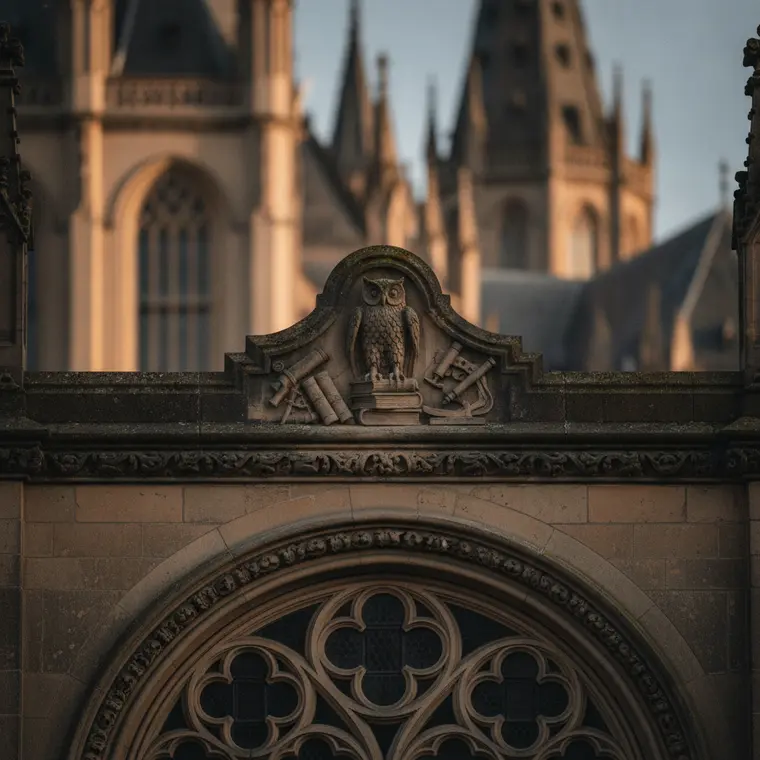
Jena, June 30, 2026 – The Friedrich-Schiller-Universität Jena has shaped the face and soul of the Thuringian Lichtstadt for centuries. A new documentary by Mitteldeutscher Rundfunk (MDR) is now dedicated to this extraordinary symbiosis between science, urban society, and modern top-level research.
- Topic: Documentary “Jena und seine Uni – Exzellenz aus Tradition”
- Broadcaster & Platform: MDR / ARD Mediathek
- Runtime: 29 minutes
- Key Content: Historical development, influence on the cityscape, student life, and modern research projects
- Available online: Watch the MDR documentary in the ARD Mediathek
The MDR Documentary: 29 Minutes of Concentrated Jena History
The MDR documentary impressively shows how closely the Friedrich-Schiller-Universität (FSU) Jena and the city itself are interwoven. With a runtime of approximately 29 minutes, the film offers deep insight into the interaction between students, researchers, and urban structures. The university is not just an educational institution here, but acts as a historical and modern engine of urban development. The documentary is now available in the ARD Mediathek and is aimed at citizens interested in history as well as active students and scientists.
A Centuries-Old Symbiosis: The Roots of the “Lichtstadt”
The close bond between Jena and its university dates back a long way. Founded in 1558 by Kurfürst Johann Friedrich I. von Sachsen, the university quickly developed into a magnet for thinkers and scholars. Significant figures such as Johann Wolfgang von Goethe, Friedrich Schiller – the namesake of the FSU – as well as philosophers like Fichte, Schelling, and Hegel shaped the era of “Jenaer Klassik” and German Romanticism.
This historical depth remains anchored in the city’s collective memory to this day. However, the symbiosis is evident not only in the past but also in the present. Jena has developed into one of the most dynamic economic and scientific locations in Thüringen. The close cooperation between the university, non-university research institutions, and research-oriented companies regularly secures Jena top positions in national and international rankings.
Influence on the Cityscape and Urban Culture
Anyone walking through Jena immediately feels the influence of the approximately 18,000 students. Entire districts are shaped by university life. The historical Damenviertel with its magnificent old buildings is a popular residential area for academics, while the Wagnergasse with its cafés and pubs is considered the student heart of the city. The university also sets striking architectural accents: from the historical Universitätshauptgebäude at the Fürstengraben to the modern campus at the Ernst-Abbe-Platz, historical substance and modern infrastructure merge in the cityscape.
Top-Level Research in the 21st Century
Today, the FSU Jena is one of the most research-intensive universities in eastern Germany. It focuses on the fields of optics and photonics, materials science, and life sciences. Scientists here work on forward-looking questions that receive global attention. For example, the university cooperates closely with top institutes such as the Leibniz-Institut für Alternsforschung (FLI). Recently, a significant scientific success was recorded in Jena when the mitochondria puzzle was solved – a breakthrough that shows how Jena’s top-level research could revolutionize cell rejuvenation. The expanded research program of the university medicine also illustrates the enormous range and medical excellence of the location.
🏛️ History & Buildings: Milestones of Jena’s University History
The structural and historical development of the Friedrich-Schiller-Universität Jena is closely linked to central buildings in the city area:
- The Universitätshauptgebäude (UHG): Built between 1905 and 1908 on the site of the former Jenaer Schloss. It impresses with its neo-baroque architecture and today houses the Aula with significant murals by Ferdinand Hodler.
- The Botanischer Garten: Germany’s second oldest botanical garden was laid out in 1586 and significantly expanded under the direction of Goethe in the late 18th century. It still serves research today and is a green refuge in the city center.
- The Thüringer Universitäts- und Landesbibliothek (ThULB): As the largest library in the Free State of Thüringen, it preserves valuable historical manuscripts and is simultaneously a state-of-the-art information center for students.
Source:
Jena und seine Uni – Exzellenz aus Tradition – watch here
Transparency Note: This article was automatically created, editorially reviewed, and expanded with AI support.