
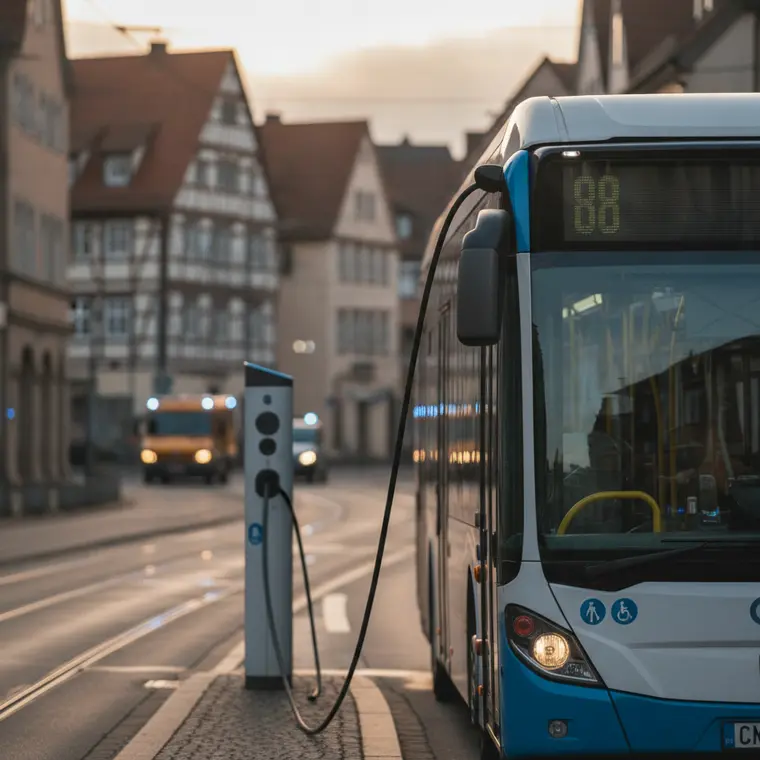
Jena, July 4, 2026 – The city of Jena is initiating the systematic decarbonization of its bus network: in the future, all new fleet acquisitions will consist exclusively of electric buses.
- Decision: Gradual transition of the bus fleet to e-buses for all replacement purchases
- Goal: Climate-neutral local public transport in Jena by 2035
- Infrastructure: Expansion of charging stations and adaptation of workshops required
- Financing: Planned subsidies from the federal government and the Free State of Thuringia
Climate Protection as a Driver of Jena’s Transport Transition
The Jena City Council has set a clear course for the future of urban mobility. When renewing the bus fleet of the Stadtwerke Jena, the focus will now be consistently on electromobility. As soon as older or defective diesel vehicles are retired, the current resolution mandates the purchase of modern e-buses. This marks the gradual departure from fossil fuels in the municipal transit network.
This decision aligns seamlessly with the long-term climate protection goals of the city on the Saale. By 2035, the entire public transport system (ÖPNV) in Jena is to be operated in a completely climate-neutral manner. Alongside the continuous expansion of the tram network, the electrification of buses forms the second pillar of this ecological strategy. The stated goal of urban planners is to drastically reduce CO2 emissions in the mobility sector while simultaneously increasing quality of life through fewer exhaust fumes and a noticeable reduction in traffic noise in residential areas.
High Investments in Charging Technology and Workshops
The system change presents the transport operators involved with significant logistical and financial challenges. Procuring the vehicles alone is not sufficient; parallel to this, a high-performance charging infrastructure must be established at the central depot and at key terminal stops. Furthermore, existing maintenance halls require profound technical upgrades to meet the specific safety requirements for working on high-voltage systems.
Since these extensive infrastructure measures exceed municipal budgets, Jena is relying heavily on external financial support. The necessary investments are to be largely co-financed through grants from the federal government and the Free State of Thuringia to ensure the economic viability of the local mobility transition.
🚗 Traffic & Everyday Impacts of the Mobility Transition
The conversion of the bus fleet to purely electric propulsion has direct effects on daily operations in the Jena public transport network. In addition to the gradual renewal of vehicles, extensive adjustments to the charging and grid infrastructure must be made, particularly at the depot. For passengers, the change means quieter and emission-free journeys on all lines in the city area in the medium term, which will particularly benefit heavily frequented axes such as Neugasse or Löbdergraben. Furthermore, workshop staff must be specifically qualified for work on high-voltage systems to ensure the safe operation of the new e-buses in the long term.
Source:
Easy Language: The city of Jena plans to buy new e-buses
Transparency Note: This article was created automatically, editorially reviewed, and expanded with AI assistance.