
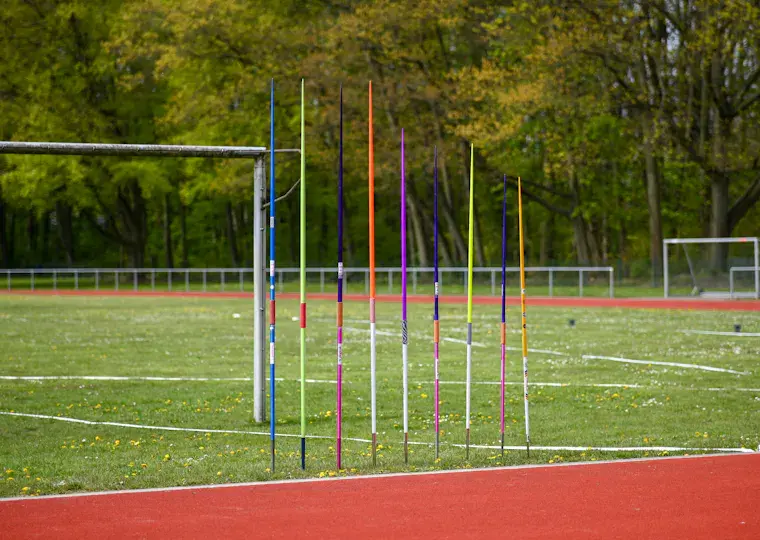
Jena, May 26, 2026. Exactly 30 years ago, a moment for eternity occurred in Jena’s sporting history: On May 25, 1996, Czech javelin thrower Jan Železný threw the equipment to a distance of 98.48 meters, which remains unbeaten to this day. This world record is among the longest-standing top marks in the history of modern athletics.
- Event: 30th anniversary of the javelin throw world record
- Date of the record: May 25, 1996
- Location: Ernst-Abbe-Sportfeld, Jena
- Athlete: Jan Železný (Czech Republic)
- Distance: 98.48 meters
An inconspicuous May day becomes sports history
It was a relatively small athletics meeting that Jan Železný traveled to Jena for on May 25, 1996. The then 30-year-old Czech had arrived in his own car, accompanied by his wife and two small children. The goal of the trip was by no means an announced record attempt, but simply a test of his own form under competition conditions.
What then happened at the Ernst-Abbe-Sportfeld left the sporting world in astonishment. With a perfect coordination of approach speed, precise technique, and optimal coordination, Železný hurled the javelin in the stadium to 98.48 meters. It was a throw that seemed to redefine physical limits, especially against the backdrop of a profound rule change ten years earlier. In 1986, a new, heavier javelin had been introduced with a center of gravity further forward. This measure was intended to deliberately shorten flight distances to minimize safety risks in stadiums. Approaching the magic 100-meter mark was considered almost impossible by experts with the new equipment.
The exceptional career of Jan Železný
The record throw in Jena was no coincidence, but the pinnacle of an unparalleled career. Jan Železný dominated the discipline for years, securing a total of three Olympic gold medals and several world championship titles. He is considered the defining figure of Czech javelin throwing to this day, a sport with a great tradition in his home country.
Although Železný celebrated further great successes after the triumph in Jena, he never managed to surpass his own top mark again. In the following years, the athlete increasingly struggled with back problems. He finally ended his active career in 2006 at the age of 40. However, he remained closely connected to the sport and today passes on his experience as a coach to subsequent generations.
Decades-long hunt for the top mark
For decades, subsequent generations struggled in vain against the record mark from Jena. Železný’s direct competitors from the 1990s, including the Finn Seppo Räty or the Briton Steve Backley, did not come anywhere near the distance.
It was not until September 2020 that the German javelin thrower Johannes Vetter from Dresden managed to seriously threaten the historical mark. At a meeting in Chorzów, Poland, Vetter threw the javelin to 97.76 meters, remaining only 72 centimeters below Železný’s world record. To this day, this throw is the only one that has come into the immediate vicinity of the top mark from Jena.
🏛️ The Ernst-Abbe-Sportfeld as a historical athletics site
The Ernst-Abbe-Sportfeld in Jena has a rich history that extends far beyond football. Named after the physicist, social reformer, and Zeiss patron Ernst Abbe, the sports facility offered excellent conditions for athletics in the 1990s. The location in the Saaletal favored optimal wind conditions for throwing disciplines in certain weather situations. In addition to the historic javelin throw world record of 1996, the stadium was a venue for high-profile meetings and a training center for GDR and all-German top athletes for decades. Even though the area is primarily used as a modern football stadium today, the Ernst-Abbe-Sportfeld remains firmly anchored in the annals of world sport as the place where one of the most enduring top marks in athletics was set.
Source:
Javelin throw world record from Jena: Jan Železný’s top mark stands for 30 years
Transparency note: This article was created automatically, editorially reviewed, and expanded with AI support.