
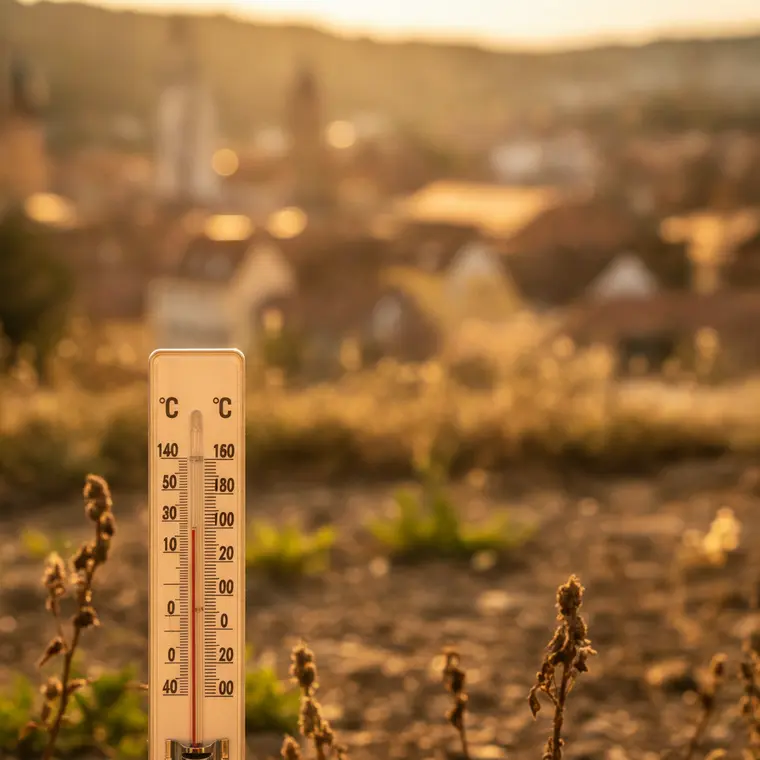
Jena, June 26, 2026 – Ahead of the upcoming weekend, Central Germany is facing an extreme heatwave, with thermometers potentially exceeding the 40-degree mark in some areas. Alongside Bernburg and Torgau, the city of Jena on the Saale has been one of the region’s proven climatic hotspots for years.
- Topic: Extreme heat and climatic peculiarities in Jena
- Weather situation: Possible record temperatures of up to 40 °C over the weekend
- Cause for Jena: Geographic basin location favors extreme heat development
- Important contact point: Citizen Service of the City of Jena at phone 03641 490
From Exception to the New Normal
Long-term measurement data from the Deutscher Wetterdienst (DWD) paint a clear picture for Thüringen and neighboring federal states: the number of so-called “hot days” with temperatures of at least 30 degrees has increased significantly. While an average of only four to five such days per year were recorded between the 1950s and 1980s, the average over the past decade has already risen to twelve days.
The situation is particularly extreme in Jena. Statistics show that summers with more than 15 hot days used to be rare exceptions, occurring statistically only every 50 years. Today, citizens experience such extreme phases on average every three and a half years.
The Climatic Peculiarity: Jena’s Basin Location
The fact that Jena regularly occupies top positions in heat statistics is no coincidence, but physically determined. The city lies in a deep-cut valley of the Saale, surrounded by prominent Muschelkalk slopes. This topography leads to a distinct microclimate with the following characteristics:
- Heat absorption: The surrounding, barren limestone rocks heat up massively under direct sunlight and radiate the heat directly into the urban area like a giant tiled stove.
- Lack of air circulation: Due to the basin location, ground-level wind is slowed down. Fresh, cooling air masses from the surrounding countryside have difficulty reaching the city center.
- Pollutant and heat accumulation: While warm air rises, it cools in the upper air layers and sinks back into the basin under certain high-pressure conditions, leading to continuous heating.
Practical Behavioral Tips for Extreme Heatwaves
To relieve the body at temperatures well above 30 degrees, medical professionals and the city administration recommend urgent precautionary measures. It is important to adapt daily routines to the heat:
- Proper ventilation: Keep windows strictly closed during the day and darken them with shutters or curtains. Only ventilate when outside temperatures are lower than indoors – usually late in the evening or in the early morning hours.
- Drink enough fluids: Drink at least two to three liters of water, unsweetened herbal teas, or diluted fruit juices. Extremely cold drinks, as well as alcohol and caffeine, should be avoided as they place additional strain on the circulatory system.
- Reschedule activities: Move physically demanding work and sports to the cooler morning hours. Direct sun should be completely avoided between 11:00 AM and 3:00 PM.
- Seek out cool places: Parks such as the Paradiespark offer noticeable shade due to the old tree population. Those looking to cool off by the water can use the FeierAbend at the Strandschleicher im Südbad for relaxing hours.
🛡️ Prevention & Advice: The Heat Action Plan of the City of Jena
Due to its special climatic position, the city of Jena began developing a specific Heat Action Plan years ago. This is intended to minimize health risks for the population and adapt urban life to climate change in the long term.
The plan focuses on three central pillars:
- Urban greening: By planting heat-resistant urban trees, greening facades, and unsealing squares, the development of extreme urban heat islands is to be counteracted.
- Drinking water in public spaces: Installation and maintenance of free drinking water fountains in the city area to allow passers-by to hydrate quickly.
- Early warning systems for risk groups: Targeted cooperation with nursing homes, hospitals, and daycare centers to warn sensitive groups of people in good time of upcoming heatwaves and to activate specific care and nutrition plans.
🛒 Well-equipped for hot summer days
Protect yourself on the go and at home from extreme temperatures. A high-quality, double-walled stainless steel water bottle keeps your water ice-cold for hours, even in the greatest heat.
Sources: Deutscher Wetterdienst (DWD), data analysis on climatic warming in Central Germany since 1951.
Source:
40 Degrees in Central Germany: Jena, Bernburg and Torgau have been heat hotspots for years
Transparency Note: This article was created automatically, editorially reviewed, and expanded with AI support.