
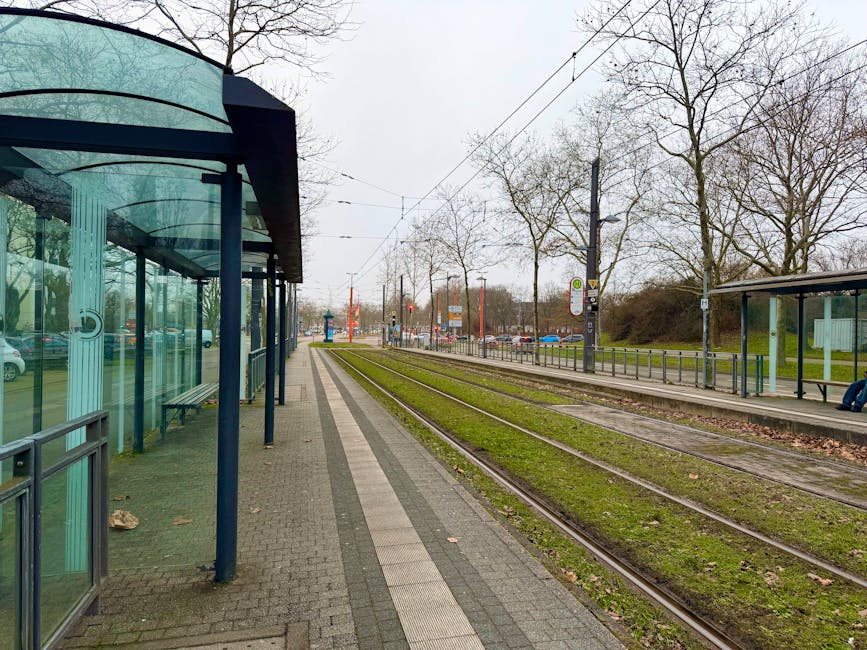
Jena, 06.03.2026 – Commuters and students in Jena will need strong nerves again starting next week. The Verdi union has called on employees of Thuringian local transport companies for another warning strike, this time lasting several days. The walkout begins on Monday and will paralyze large parts of public transport.
- What: Warning strike in public transport (ÖPNV)
- When: From Monday, March 9, 2026, for three and a half days
- Where: Thüringen (especially municipal companies such as Jenaer Nahverkehr)
- Who is striking: Verdi union
Three and a Half Days of Standstill in Local Transport
Following selective work stoppages in recent weeks, the Verdi union is now massively expanding the labor dispute. Starting Monday, March 9, 2026, employees of municipal transport companies are called upon to cease work for three and a half days. This means that a majority of buses and trams are expected to remain in the depots until Thursday afternoon.
In addition to Erfurt and Gera, passengers of Jenaer Nahverkehr are also directly affected by the cancellations. It is expected that the entire city network – from the tram lines to Lobeda and Winzerla to the bus connections to the outskirts – will largely come to a standstill.
Background: Local Transport in Jena and Alternatives
Municipal local transport is the backbone of urban mobility in Jena. Every day, tens of thousands of commuters, students, and pupils use the dense network of five tram lines and numerous bus lines. In particular, the main axes between the city center, the Beutenberg Campus, and the densely populated districts of Lobeda and Winzerla are heavily frequented.
What passengers need to know now:
- Regional transport continues: Regional trains (such as DB or Abellio) are generally not affected by municipal Verdi strikes. Commuters within Jena can use stations such as Göschwitz, Paradies, or Westbahnhof for urban bridging.
- Carpooling & Cycling: It is recommended to form carpools early or switch to bicycles. Since a significantly higher volume of cars is expected on the main roads (such as the B88, Kahlaische Straße, or Rudolstädter Straße), significantly more time should be planned for the commute.
The background of the strike wave is an ongoing collective bargaining conflict in municipal local transport, in which the Verdi union aims to push through improved working conditions and higher wages for employees.
Source:
Strike again: Where no buses and trains will run in Thüringen from Monday
Transparency Note: This article was automatically created, editorially reviewed, and expanded with AI support.