
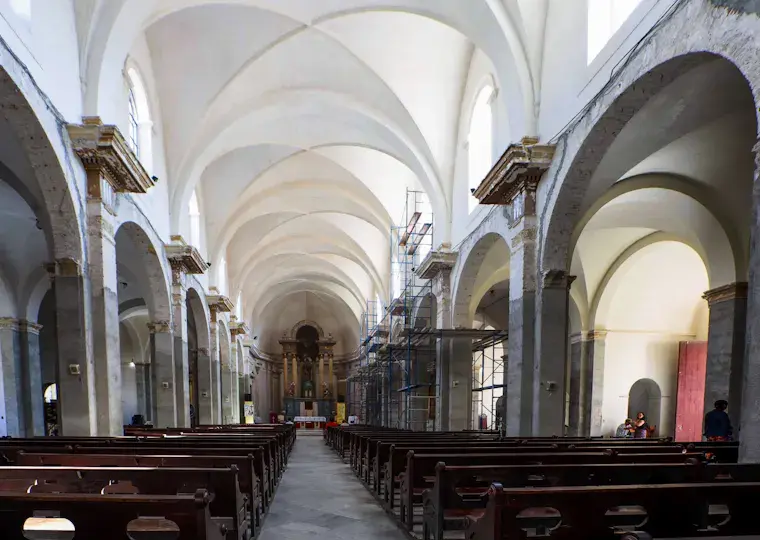
Jena, 01.04.2026 – The extensive renovation work on the Stadtkirche St. Michael must temporarily rest for financial reasons. To still grant locals and tourists a glimpse into the historic building, the vestibule will open its doors starting April 2nd.
- Location: Stadtkirche St. Michael, Jena
- Status: Renovation work temporarily halted (lack of financial resources)
- Alternative: Opening of the vestibule from Thursday, April 2, 2026
- On site: Digital information board and a copy of the historic Lutherplatte
Creative solution for visitors despite construction stop
The interruption of construction and renovation projects on historic buildings is a common phenomenon when planned budgets are exhausted. To avoid closing the Stadtkirche St. Michael completely to the public, a compromise has now been found. From April 2nd, interested parties can enter the vestibule. From there, a view into the interior of the history-steeped nave is possible without directly entering the dormant construction site.
As a special element, a replica of the famous Lutherplatte has been placed in this accessible area. Additionally, a newly installed digital information board ensures that visitors can obtain detailed information on site.
Background: The significance of St. Michael
The evangelical Stadtkirche St. Michael is, alongside the Jentower, one of the most defining buildings in the Jena city center. The late Gothic hall church formed the religious center of the city for centuries. The building is known supra-regionally primarily for the original bronze grave plate of Martin Luther, the so-called Lutherplatte.
This was originally designed by Lucas Cranach the Elder. It was actually intended for the Reformer’s grave in Wittenberg but reached Jena through the historical turmoil of the Schmalkaldic War. Since the original must be heavily protected for conservation reasons anyway, the copy now exhibited in the vestibule offers an excellent opportunity to view the details of this artwork up close.
Renovations on such old sacred buildings are extremely cost-intensive. They often require specialized restorers, historically correct building materials, and strict heritage protection requirements. Funding, regional church grants, and donations from the population usually play the decisive role in the long-term financing of such construction projects to overcome stops.
Source:
Stadtkirche – Renovation paused for financial reasons
Transparency Note: This article was automatically generated, editorially reviewed, and expanded with AI support.