
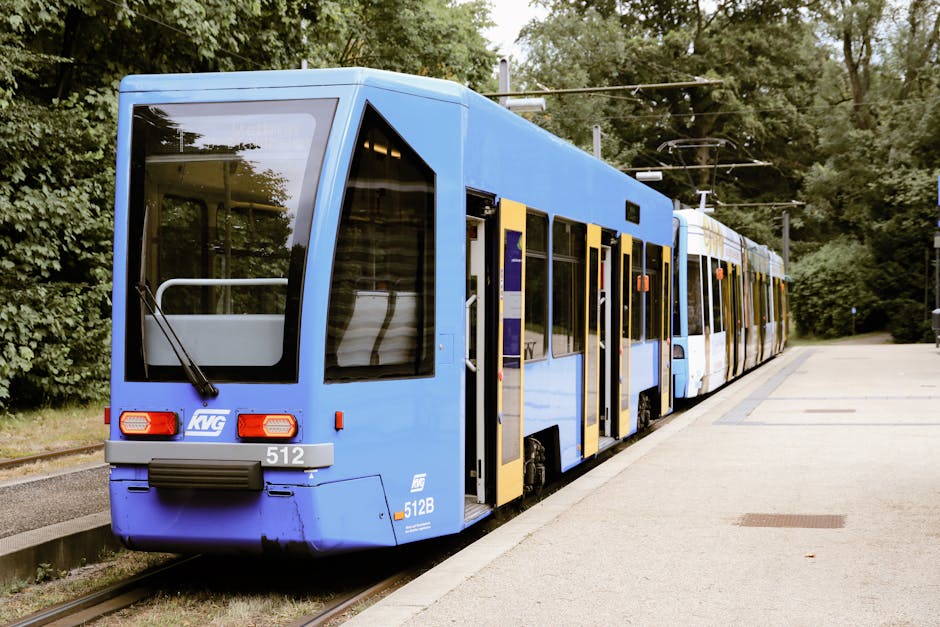
Jena, March 11, 2026. The recurring warning strikes in public transport (ÖPNV) are pushing Jena to its financial and structural limits. Mayor Dr. Thomas Nitzsche warns in a letter to the Kommunaler Arbeitgeberverband of the massive impacts of the current union demands on the city.
- What: Impacts of public transport warning strikes (TV-N) in Jena
- Actors: Stadt Jena, Verdi union, Kommunaler Arbeitgeberverband
- Calculated additional costs: approx. 4.2 million euros per year (+17 percent)
- Personnel requirements: 20 new full-time positions necessary in driving services alone
- Possible consequence: Permanent service cuts in the timetable
Cost Explosion and Personnel Shortage Feared
The Verdi union is demanding, among other things, a reduction in weekly working hours with full wage compensation as part of the collective agreement for local transport (TV-N). According to Mayor Dr. Thomas Nitzsche, these demands would be financially unmanageable for Jena’s local transport. According to calculations by the municipal transport companies, costs would rise by around 17 percent, representing an annual additional burden of 4.2 million euros.
Another problem is the regional labor market. To maintain operations with reduced working hours, approximately 20 additional full-time positions would have to be created in driving services alone. Given the ongoing shortage of skilled workers, Nitzsche stated it would be extremely difficult to find appropriately qualified personnel in the region.
City’s Financial Situation Under Enormous Pressure
Jena’s Head of Finance, Benjamin Koppe, also views the negotiations with great concern. He points to the municipality’s already strained budget situation. A drastically increased need for subsidies for local transport would ultimately have to be offset by the Stadtwerke group or directly from the city budget. According to Koppe, both paths are not sustainable in the long term.
Furthermore, the city administration fears an imbalance in the internal compensation structure if salaries in local transport decouple significantly from those of the rest of the city administration and other municipal enterprises.
Threatening Service Cuts in the Bus and Rail Network
Should costs rise to the predicted extent, the city sees the timetable itself at risk. Permanent increases in expenditure without corresponding financial coverage would inevitably lead to adjustments in the transport services offered. Koppe also refers to the Deutscher Städtetag, which has been warning of growing deficits in municipal budgets for months.
Service cuts would primarily affect commuters, students, and residents of rural districts. The city administration emphasizes that this fundamentally contradicts the goal of providing the best possible public transport service.
Background: Public Transport in Jena
Public transport is the backbone of urban mobility in Jena. With a complex topography in the Saaletal, particularly high-lying and densely populated districts such as Lobeda and Winzerla are heavily dependent on reliable connections via trams. Warning strikes in the TV-N affect tens of thousands of passengers in Jena, including a high proportion of students from the Friedrich-Schiller-Universität as well as school pupils. A thinning of timetables would massively slow down the local transport transition and lead to a greater burden on main traffic axes (such as the B88) due to motorized individual traffic.
Source:
Strike paralyzes Jena: Mayor loses patience – “Unmanageable”
Transparency Note: This article was created automatically, editorially reviewed, and expanded with AI support.