
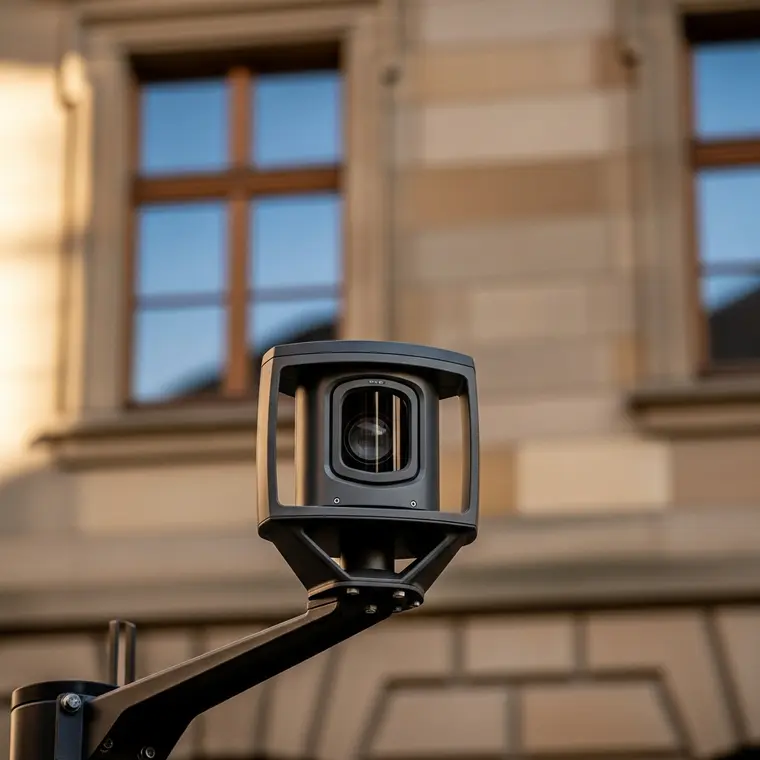
Jena, April 05, 2026. In the Jena city center, pedestrians and cyclists are now being recorded by modern Lidar sensors. The city is using the new counting systems to obtain a detailed picture of movement flows in the center.
- Measure: Installation of Lidar object counters on lampposts to record visitor flows.
- Locations: Initially at the entrance of Johannisstraße; further systems at Markt and Kirchplatz are planned.
- Data Protection: Data collection is strictly anonymous. There is no storage of movement profiles of individual persons.
- Technology: Eye-safe Class 1 laser.
How Lidar Counting Works
An inconspicuous box on a lamppost marks the beginning of the new data collection in the city center. Specifically, a so-called Lidar object counter is used. This device emits invisible laser pulses that are reflected by surfaces in the surrounding area. Through these reflections, the sensors can reliably register how many pedestrians or cyclists pass through the area in a certain period.
Particular emphasis is placed on maintaining privacy. The system only records raw numbers and frequencies, but does not store any personal characteristics. According to the city administration, these are safety class 1 lasers, which are completely harmless to the human eye.
Expansion of Data Collection Planned
The installation at the entrance of Johannisstraße will not remain the only measuring point in the city, according to reports from the Ostthüringer Zeitung. In the coming months, additional recording systems are to be set up at other central locations such as the Markt and the Kirchplatz. The municipality plans to use a technology mix: in addition to lasers, radar systems and special sensors are to be installed in the future. The latter record anonymized WLAN signals emitted by smartphones to generate an even more precise picture of utilization.
Background: Urban Planning in the Center
Streets like Johannisstraße form one of the central axes for pedestrian and bicycle traffic in Jena, as they connect the university campus with the historical city center and further districts. Precise and continuous data collection of visitor flows is of great importance for modern urban planning. Through the collected information, municipalities can understand at what times of day and on which days of the week certain areas are particularly heavily or lightly frequented. This database not only helps with future traffic planning and the management of major events but also supports local retail in identifying changes in the attractiveness of the city center at an early stage.
Source:
Thuringian city deploys laser equipment – to collect data
Transparency note: This article was automatically created, editorially reviewed, and expanded with AI support.