
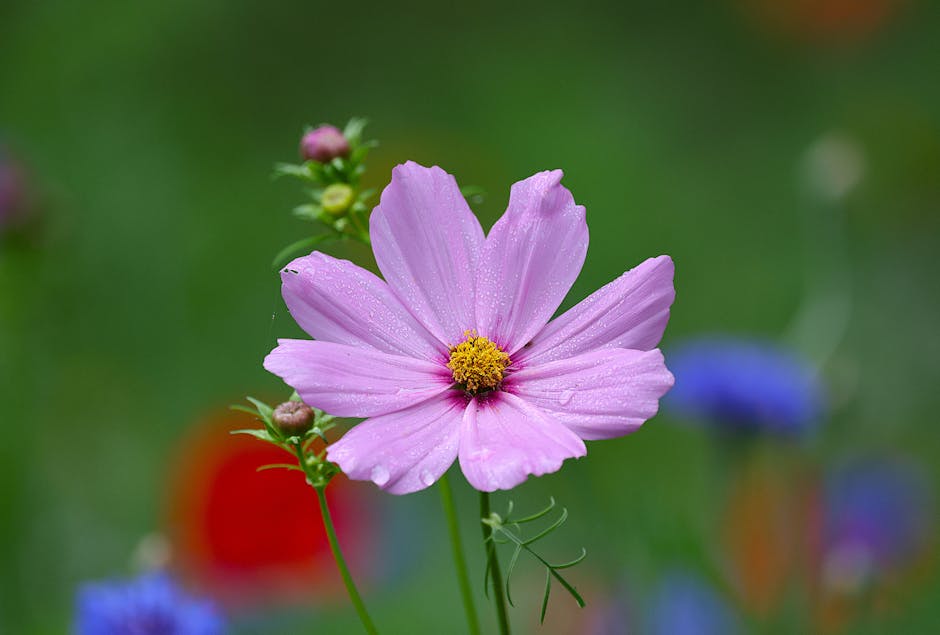
Jena, March 10, 2026 – Anyone wishing to promote biodiversity right on their doorstep can now receive practical and theoretical guidance: the Volkshochschule Jena is organizing a basic course on the near-natural design of green oases in urban spaces.
- What: Basic course „Near-Natural (Front) Gardens“
- When: Saturday, March 14, 2026, 10:00 a.m. to 1:00 p.m.
- Where: Volkshochschule Jena, Grietgasse 17a
- Registration: Required in advance at www.vhs-jena.de
Supporting Nature with Native Plants
Whether on a private balcony, terrace, in classic private gardens, or in front of residential blocks and corporate buildings – even small areas can make a significant contribution to preserving biodiversity. The course offered is aimed at all interested parties who want to strengthen ecological diversity in Jena using native wild plants and wild shrubs.
The compact seminar is led by Christina Zaubitzer. The expert has been actively involved in the Thüringen regional group of NaturGarten e.V. as a career changer since 2018. During the three scheduled course hours on Saturday morning, she will provide participants with a sound introduction that includes both theoretical foundations and practical implementation tips for their own green spaces.
Background: Why Near-Natural Gardens Are Becoming Increasingly Important
The conscious move away from high-maintenance, short-mown lawns or sterile gravel gardens toward near-natural planting is not just a visual gain. Native wild plants have been optimally adapted to the local climate over thousands of years and require significantly less watering during hot summers, which are also increasingly occurring in the Saaletal.
Furthermore, they form the indispensable basis of life for native insects such as wild bees, butterflies, and beetles, which in turn serve as a food source for birds. Gardening departments and environmental associations now explicitly recommend the creation of flowering strips and insect-friendly front gardens to positively influence the urban microclimate in the city area and make an active contribution to nature conservation.
Source:
Near-Natural (Front) Gardens
Transparency note: This article was created automatically, editorially reviewed, and expanded with AI support.