
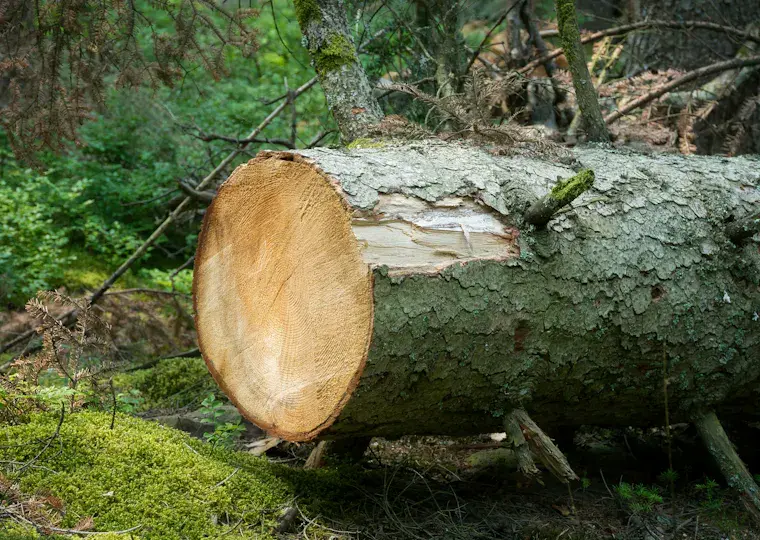
Jena, 01.04.2026. In a backyard on the street Am Birnstiel, eight trees and other shrubs were cleared as early as February without the required municipal permit. Carl-Zeiss-Siedlung GmbH is responsible for the felling. The incident is now resulting in official consequences.
- Event: Illegal felling of eight trees as well as hedges and shrubs
- Responsible Party: Carl-Zeiss-Siedlung GmbH
- Location: Backyard Am Birnstiel, Jena
- Time: February 2026
Compensation through Fines Often Difficult
The incident once again brings the protection of urban greenery into focus. When old trees fall, a subsequently imposed fine cannot outweigh the immediate ecological loss for the microclimate in the affected neighborhood. Carl-Zeiss-Siedlung GmbH failed to obtain the mandatory permit required by municipal statutes before the clearing work in the backyard. Now, the consequences under nature conservation law must be clarified.
Background: Tree Protection and Replacement Plantings in Jena
The street Am Birnstiel is located in a densely built-up and heavily frequented area in direct proximity to the Ernst-Abbe-Hochschule and adjacent residential neighborhoods. The old tree population in such backyards is crucial for natural cooling on hot summer days, binds fine dust, and serves as an indispensable habitat for urban bird and insect species.
The Jena Tree Protection Ordinance: In the City of Light, trees above a certain trunk circumference (usually from 50 centimeters, measured at a height of one meter) are strictly protected. Hedges and large-scale shrubs may also not be cleared, especially during the statutory breeding and nesting period from March 1 to September 30. Exceptions only exist in cases of acute traffic hazards or tree disease, which must always be verified by the city administration.
If protected woody plants are removed illegally, heavy fines are possible, which are based on the Thuringian Nature Conservation Act and can amount to up to 50,000 euros. In addition, the Lower Nature Conservation Authority usually orders so-called replacement plantings. However, since newly planted saplings take decades to replace the ecological function, shading effect, and CO2 storage of a mature tree, the damage to urban greenery is often long-lasting despite the fines.
Source:
Digital Newspaper & Magazine Subscriptions
Transparency Note: This article was created automatically, editorially reviewed, and expanded with AI support.