
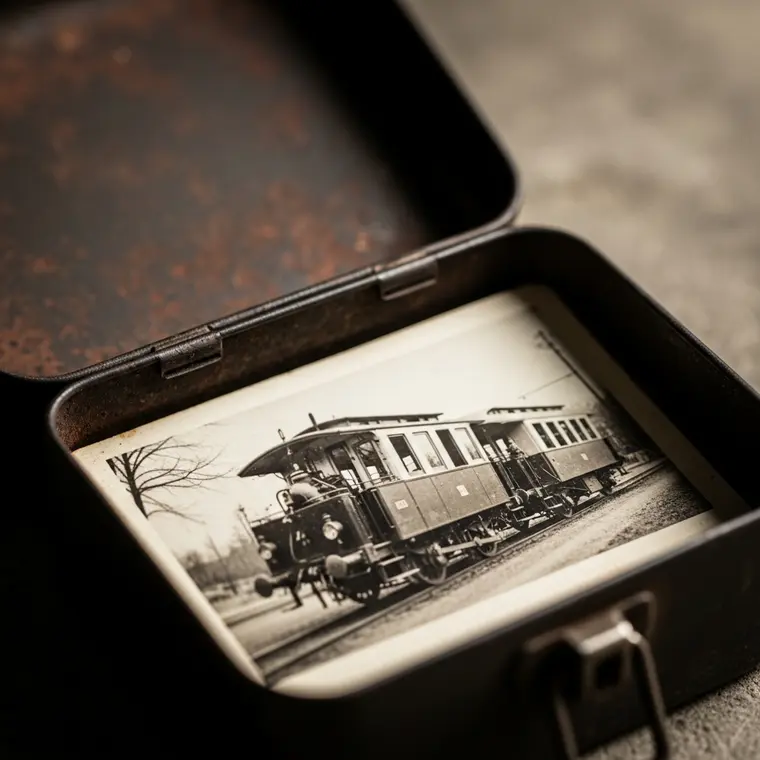
Jena/Neuengönna, 05.04.2026. Just in time for the major 125th anniversary of the Jena tram, a special historical document is moving into the spotlight. A photo rescued years ago from the surrounding area shows a previously unknown pioneer of urban local transport and is now sparking interest in the city’s history.
- Event: Historical photo find for the tram anniversary
- Occasion: 125 years of Jena local transport
- Location of find: Clearing of a private house in Neuengönna
- Discoverer: Robert Heyne
A treasure from the estate
When the Jenaer Nahverkehr recently presented its extensive program for the 125th anniversary of the tram, Robert Heyne remembered a very special keepsake. A few years ago, while clearing out a house in the municipality of Neuengönna, located north of Jena, he was allowed to keep an old black-and-white photograph. The image shows one of the early pioneers of Jena’s tram history. However, the exact identity of the man pictured remains a mystery for now.
Such private accidental finds are of invaluable worth for the processing of regional transport history. Often, such historical documents lie completely unnoticed in old albums or attics for decades before being saved from disposal by fortunate circumstances. The rescued image from Robert Heyne now adds another fascinating facet to the visual memory of Jenaer Nahverkehr.
Historical Context: 125 Years of Jena Local Transport
The history of the tram in Jena officially began in April 1901. At that time, the first electrically operated wagons rolled through the streets, gradually replacing horse-drawn carriages. This technical innovation revolutionized the mobility of the then rapidly growing university and industrial city, particularly for the workers of the Zeiss plants.
The municipal line network grew rapidly in the following decades and formed the backbone of the local infrastructure. The transport companies traditionally take anniversaries like this as an opportunity to commemorate the founding era with historical exhibitions and special tours. Private photographs and traditions play a central role in documenting the historical cityscape and the working conditions of the first “tram workers” in detail.
Source:
Digital Newspaper & Magazine Subscriptions
Transparency Note: This article was automatically created, editorially reviewed, and expanded with AI support.