
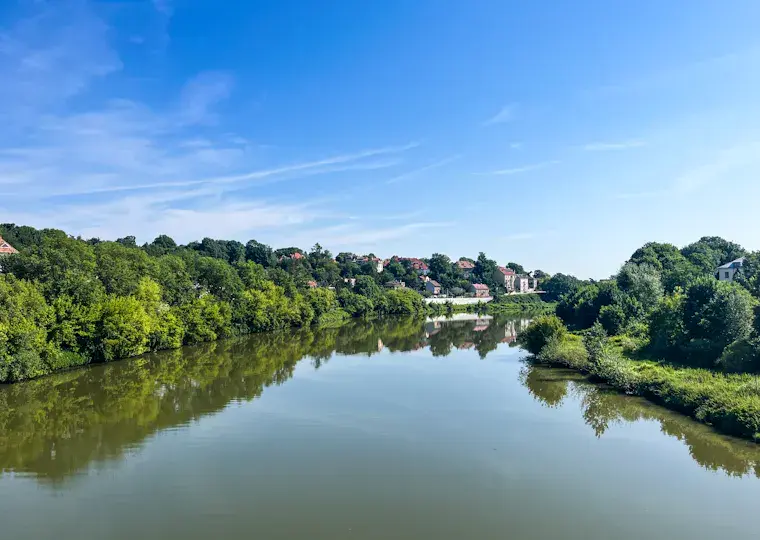
Jena, April 07, 2026 – On the occasion of today’s “Beaver Day,” NABU Thüringen is focusing on the ecological and economic importance of Europe’s largest rodent. The conservationists are calling for the beaver to be granted more space at local waters, as it makes expensive revitalization measures unnecessary as a natural landscape architect.
- Topic: Importance of the beaver for nature and water protection
- Occasion: International Beaver Day on April 7
- NABU Demand: Expansion of areas and establishment of buffer zones along water bodies
- Benefits: Free renaturation, natural flood protection, and improved water quality
Ecological Benefits and Enormous Cost Savings
The beaver takes over central renaturation tasks significantly faster, more cost-effectively, and, above all, without bureaucratic effort, according to the Nature and Biodiversity Conservation Union (NABU). By building characteristic dams, the animals dam up water bodies and thus create structure-rich habitats. Numerous other animal and plant species benefit from these wetlands. At the same time, the rodents’ work stabilizes the regional water balance, improves water quality, and makes an important contribution to flood protection and climate adaptation.
A current cost-benefit analysis by NABU illustrates the enormous financial savings potential for municipalities and the state. While technical measures and structural interventions for water revitalization often consume more than 100,000 euros and drag on for years, the beaver performs exactly this landscape-shaping work completely free of charge and in a comparatively short time.
Demand for Buffer Zones
To advance nature conservation and climate adaptation more efficiently, NABU Thüringen strongly advocates for expanding the animals’ habitat. Specifically, sufficient buffer zones should be established along the water bodies to minimize conflicts with agriculture or infrastructure and to allow the beaver to carry out its construction activities.
Background: The Beaver in the Saale Region
After the European beaver (Castor fiber) was considered almost extinct in Thüringen for a long time, it has been successfully spreading again along the Saale and its tributaries for several years. In the urban area of Jena and the adjacent Saale-Holzland-Kreis, typical feeding marks on trees and shrubs can be observed repeatedly during walks along the riverbank. However, the return of these strictly protected animals also presents challenges for cities and agricultural businesses – for example, when dams flood fields or undermine paths. To enable peaceful coexistence, the Thüringer Ministry of the Environment and local conservation associations rely on active beaver management. This includes preventive measures such as fencing off valuable trees and advising property owners.
(Image credit: P. Wächtershäuser / naturlichter.de)
Source:
NABU: Beaver as a natural water engineer saves costs
Transparency note: This article was created automatically, editorially reviewed, and expanded with AI support.