
- Location: Löbstedter Straße 68 (KSJ-Gelände)
- 2025 Balance: 85.6 tons of items handed in
- Reuse Rate: 78 percent (69.3 tons)
- Number of Visitors: 32,962 people last year
- Popular Exchange Goods: Books, porcelain, glass, toys
Jena (18.02.2026) – In a time when sustainability and resource conservation are becoming increasingly important, Jena is setting a strong example: The “Tauschhaus 2.0” of the Kommunalservice Jena (KSJ) has established itself as a true success model for urban waste prevention. The figures now published for the year 2025 prove that the citizens of the Saalestadt are actively using the service to give well-preserved items a second life instead of letting them end up in waste incineration.
Impressive Figures for Environmental Protection
The statistics speak a clear language: Last year, a total of 85.6 tons of well-preserved goods were handed in at the Tauschhaus. Of these, 69.3 tons directly found a new owner. This corresponds to a remarkable reuse rate of 78 percent. The concept of the circular economy takes effect here directly: What has become useless for one person becomes a new favorite piece for another.
The handling of the remaining articles is also noteworthy. The remaining approximately 18 percent of the items handed in, which did not find a new owner, did not end up in conventional residual waste. They were either sent for professional recycling or thermal recovery. In this way, the KSJ ensures that the Tauschhaus operates almost waste-free and that resources are used with maximum efficiency.
What Jena Residents Prefer to Exchange
With almost 33,000 users in 2025, the Tauschhaus in the Löbstedter Straße has become a high-frequency meeting place. But what actually changes hands there? The experience of the KSJ shows clear trends:
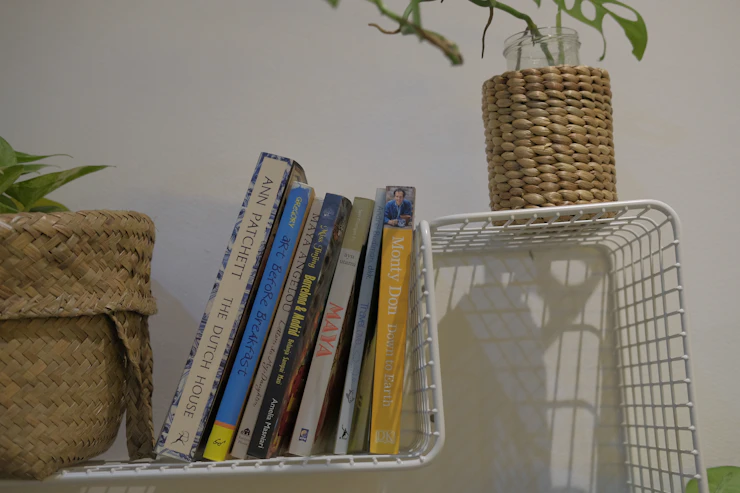
- Books: Literature is undisputed at the top. From novels to non-fiction, active bartering takes place here, which not only saves paper but also makes education and entertainment accessible free of charge.
- Household Goods: Porcelain, glass, and kitchen utensils are also perennial favorites. Often these are well-preserved pieces from household liquidations or mistaken purchases that are too good for the bin.
- Toys: Especially for families, the Tauschhaus is a valuable point of contact for equipping children’s rooms cost-effectively and sustainably.
A Contribution to the Local Sustainability Strategy
The project in Löbstedter Straße 68 is more than just a social institution; it is a technical component in the city’s climate protection concept. Every kilogram that is reused does not have to be newly produced, packaged, and transported. This saves CO₂ and conserves raw materials. The principle is very simple and low-threshold: Anyone who has something to give away brings it by; anyone who needs something takes it with them. There is usually no 1-to-1 exchange obligation, which further lowers the barrier to use.
Conclusion and Outlook
The Tauschhaus 2.0 proves that environmental protection can work in everyday life if the infrastructure is right. The high level of acceptance among the population of Jena shows that awareness of sustainability is deeply anchored in urban society. For the year 2026, the Kommunalservice Jena hopes to at least maintain this rate, if not expand it. Interested citizens can find information about the exact acceptance conditions and opening hours on the KSJ website.
The Tauschhaus thus remains one of the most effective measures against the throwaway society right on our doorstep.
Sources:
Original
Transparency Note: This article was created automatically, editorially reviewed, and expanded with AI support.