
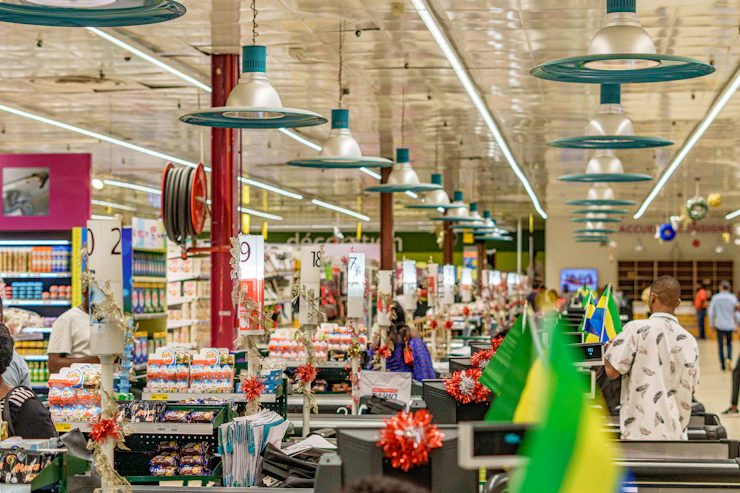
- Location: Jena, Lobeda-Ost (REWE-Markt)
- Measure: Introduction of the “Quiet Hour”
- Changes: No music, dimmed lighting, no announcements
- Target Group: People with autism, ADHD, high sensitivity, and seniors
Jena. Weekly grocery shopping is part of the routine for most people, but for some, it represents an enormous psychological burden. Bright neon lights, constant background music, beeping checkouts, and loudspeaker announcements create a noise level that can quickly lead to sensory overload. In Jena-Lobeda, a retailer is now counteracting this trend for the first time: a supermarket is testing the concept of the “Quiet Hour” to create a more inclusive shopping environment.
Oasis of Calm instead of Sensory Overload in Lobeda-Ost
The REWE-Markt in Lobeda-Ost is the pioneer in the Saalestadt. While modern supermarket concepts are often designed to create buying incentives through music and lighting, this location is now temporarily taking the opposite approach. During the “Quiet Hour,” sensory stimuli in the market are intentionally reduced.
In concrete terms, this means: the radio remains off, the lighting is dimmed—where technically possible—and unnecessary announcements are avoided. The staff is also particularly sensitized during this time to ensure a calm atmosphere. The goal is to massively reduce the stress factor during shopping. For customers, this means they can complete their errands in an environment that is not characterized by constant acoustic and visual unrest.
Background: Why Silence is Necessary
What the average customer might perceive as merely “pleasantly quiet” is a necessity for social participation for others. People on the autism spectrum, individuals with ADHD, or those with high sensitivity (HSP) often process stimuli differently. Filter mechanisms in the brain that block out unimportant background noise function differently or not at all for them.
An ordinary visit to the supermarket can thus quickly lead to physical and psychological overload, ending in panic attacks or total exhaustion (so-called “meltdowns”). Low-stimulus shopping also offers significant relief for people with migraines, epilepsy, or for seniors who feel uncomfortable in the hectic hustle and bustle. The concept originally originated in New Zealand and has since spread to Germany via Great Britain.
Jena as a Pioneer for Inclusive Urban Life
The introduction in stationary retail is a novelty for Jena, but the concept itself is not unknown in the Lichtstadt. The city administration and local actors have already demonstrated sensitivity to the topic in the past. For instance, there have already been similar phases of stimulus reduction at the Jenaer Altstadtfest and the Christmas market.
The fact that the private sector is now following suit with the market in Lobeda is an important signal. It shows that inclusion is arriving not only at city events but also in everyday life. Lobeda-Ost, as a densely populated district with a heterogeneous population structure, is ideally suited for this initiative. If the offer is well received, other branches and chains in the city area could follow the example.
Conclusion
The “Quiet Hour” is more than just a time without music. It is a sign of consideration in an increasingly loud world. For those affected, it means a bit more independence and quality of life in the middle of Jena.
Sources:
Original
Transparency Note: This article was created automatically, editorially reviewed, and expanded with AI support.